

All Victims & Veterans Network
রাষ্ট্রীয় সহিংসতার জনগণের দলিল
Who we are and how we work · Since 2009
What AVN Is
From victims to veterans
In the struggle to the practice of remembrance against erasure, in the continuing journey of resistance against oppression, and in the effort to bring stories from outside the frame into view, AVN sees itself merely as a soldier of its time. An institution is usually established with a set of defined goals and objectives, and its task is to fulfil them. In that conventional sense, AVN does not have any fixed goals or objectives. Rather, as a non-profit organisation, AVN considers it a moral responsibility to undertake whatever work is necessary, within a given social and political context, to safeguard people’s lives, voices, freedom, agency, and rights.
AVN stands for All Victims and Veterans Network. We do not believe in a politics that keeps a person permanently marked as a “victim” and allows that identity to define them. All of our efforts, research, and activism stand against this politics of victimhood. Yet the word “Victims” remains part of our organization’s name. There is a specific reason for this. We believe that people are made into victims through politically motivated projects and particular structural conditions. Yet human agency, the capacity of people to act, resist, and reclaim themselves, repeatedly rejects the identity of victimhood imposed upon them through the struggles of everyday life. It is through this continuous resistance to an imposed condition of victimhood that a person gradually becomes a veteran. They no longer remain merely a victim. Through this very act of “no longer being a victim,” they reject the politics, processes, efforts, and projects that seek to produce and sustain victimhood. They continue this resistance in whatever form and through whatever means available to them, even when no one stands beside them.
Our work is to bring these stories of struggle to light. We seek to document what people leave behind for us to learn from as they move from being victims to becoming veterans. We hope, however modestly, to help carry their struggles from a “Culture of Forgetting” into a “Culture of Remembering.” AVN’s work extends across several specific areas and forms of human rights violations. The organization focuses particularly on Extrajudicial Killings, Enforced Disappearances, Custodial Torture, Kneecapping, Border Killings, Wrongful Convictions, and Death Penalty Cases. Across these areas, AVN works primarily through three forms of engagement: research, legal support, and rights-based public advocacy and policy advocacy.
The working team
- 01
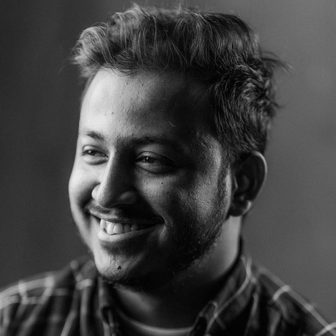
Mosfiqur Rahman Johan
Anthropologist and documentary photographer
Mosfiqur Rahman Johan (born 1997, Bangladesh) is an anthropologist and documentary photographer from Bangladesh, currently based in Berlin for the 2026 ifa CrossCulture Programme (CCP) hosted by the European Center for Constitutional and Human Rights (ECCHR). His practice combines ethnographic research, documentary photography, and long-term community engagement to explore humanitarian, environmental, and socio-political realities in Bangladesh, focusing on layered narratives of resistance, resilience, memory, and belonging.
He is the founder of the All Victims and Veterans Network (AVN), a victim-led initiative documenting state violence, and a member of Maayer Daak, an advocacy platform for victims of enforced disappearances. His extensive documentation covers extrajudicial killings, the death penalty, border killings, police brutality, displacement, and environmental degradation. He also serves as a trustee and curator for the July Mass Uprising Memorial Museum in Bangladesh, established in the former Prime Minister’s residence.
- 02
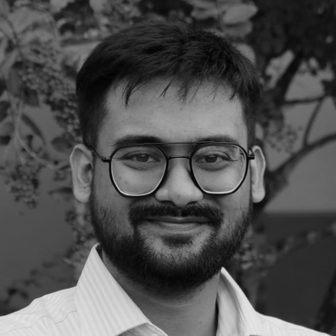
Md. Asifur Rahman
Anthropologist and researcher
Md. Asifur Rahman is a Bangladeshi anthropologist and researcher pursuing a PhD in Applied Anthropology at the University of South Florida. He holds BSS and MSS degrees in Anthropology from the University of Dhaka. His research interests include political violence, enforced disappearance, human rights, memory, uncertainty, youth, and social change. His academic work examines the lived experiences of communities affected by violence and political transformations, with particular attention to families of the enforced disappeared in Bangladesh. He has published and presented research in academic and policy-oriented forums and has experience in qualitative research, documentary filmmaking, development initiatives, and academic writing.
- 03
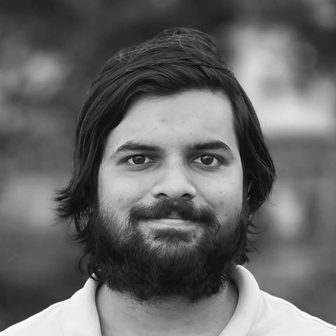
Tamim Muntasir
Academic researcher
Tamim Muntasir is a dedicated academic researcher affiliated with the University of St Andrews. He contributes extensively to the fields of political anthropology and security studies, focusing on state violence and geopolitics. His research explores the dynamics of memory and trauma, particularly examining how communities navigate socio-political transitions and structural realities in South Asia. Tamim has published his work across renowned international platforms such as Routledge, The Diplomat, and E-International Relations. Through his academic contributions, he promotes a critical understanding of Bangladesh’s evolving political and security landscape.
- 04
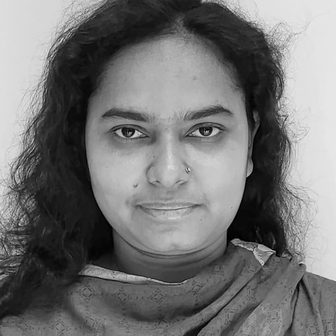
Rummana Jannat
Researcher and author
Rummana Jannat (born 26 March 1993, Gaibandha, Bangladesh) holds Bachelor’s and Master’s degrees in Linguistics from the University of Dhaka. She is the author of Miss Kori Syntax-er Baire, Tomake (November 2022) and Memories of 33 July (February 2025). She currently works as a researcher at the July Mass Uprising Memorial Museum.
- 05
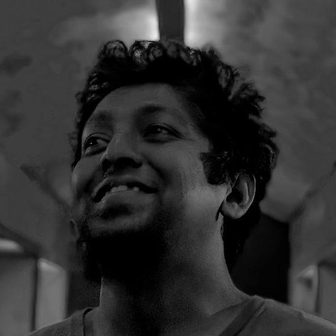
Farhad Naeem
Data & Technology Lead
Builds AVN’s data pipelines and this website. A research engineer with more than twelve years in software and data.
Research গবেষণা
The primary objective of our research activities is to build a comprehensive and reliable national archive of human rights violations committed in Bangladesh. To this end, we systematically identify, verify, and document incidents of the aforementioned forms of human rights violations across the country. In identifying victims, we first collect and analyse reports published in various national and regional newspapers. Reports on the same incident from multiple newspapers are then compared to verify the accuracy of the information.
At the next stage, we conduct field visits to the relevant locations, where interviews and further verification are carried out to establish what actually happened, as well as the nature and severity of the incident. In other words, data obtained through interviews are triangulated through a multimodal data repository composed of different types of information and sources, and are further enriched with relevant supplementary evidence.
In our research, we seek to build relationships and mutual trust not only within the research team, but also with respondents and interview participants. This process of exchange creates a reciprocal relationship that helps make the power relations between researchers and participants more balanced. We regard those who take part in our research not merely as “interviewees” or “participants,” but as research collaborators. For this reason, we maintain regular communication with them even after the interviews have been completed. At every stage of the interview process, the safety and security of participants are given the highest priority. All ethical issues related to the research are clearly explained to them from the outset. This includes obtaining their informed consent, clarifying the specific contexts in which that consent will remain valid, identifying the circumstances in which it will no longer apply, and explaining how they may withdraw their consent at any stage.
We also conduct quantitative research, in which we present various research findings on the basis of empirical data. In addition, our researchers follow an Interpretive Approach, which seeks not merely to observe an event from a distance, but to understand the social, political, and psychological contexts that shape it. After the interviews are conducted, they are transcribed into written form. Each participant’s interview is then analysed individually through Thematic Analysis. Rather than imposing predefined categories or analytical frameworks, researchers generate Preliminary Codes directly from the data, allowing patterns, repetitions, and themes to emerge organically. Based on these emerging themes, we seek to understand the causes, characteristics, objectives, intentions, and recurring patterns of human rights violations.
Another important component of our task is the preservation of the life stories of individuals who have experienced violence. This represents a broader and more in-depth dimension of our research. For this purpose, we collect interviews, photographs, video documentation, and relevant medical information. Based on these materials, an Analytical Report is prepared, documenting the forms and extent of human rights violations and violence, their human impact, and their long-term social and legal consequences.
Our research also employs Geospatial Documentation, through which incidents of state-led human rights violations across Bangladesh are systematically documented, archived, and mapped. By linking field-level data and testimonies collected from across the country with precise geographic coordinates, this method makes it possible to visualize the geographical distribution, density, and spatial patterns of state violence. In this way, people’s lived testimonies and experiences are transformed into a spatial archive. This helps us understand how state repression has operated across different geographical locations, while also preserving each individual experience in relation to the specific place and context in which it occurred.
In addition, we strongly emphasize creative forms of resistance through photography, art films, and exhibitions. While mapping grounds these incidents in physical terrain, artistic interventions transform spatial data and lived testimonies into visual narratives. Through photography, we capture the unseen scars of state repression; through art films and immersive exhibitions, we translate raw documentation into aesthetic spaces of reflection and collective memory. In doing so, artistic expression becomes both an instrument of counter-archiving and a vital site of ongoing resistance against state-enforced erasure.
Direct engagement and advocacy সরাসরি কাজ ও অ্যাডভোকেসি
In the second stage, we work directly with individuals who have experienced violence and human rights violations. Our research activities serve as the foundation for this direct engagement. One point is particularly important: we do not simply conduct campaigns or advocacy. Rather, before initiating any campaign or advocacy effort, we undertake comprehensive research on the issue concerned. In other words, our activism is grounded in a strong research-based framework.
Legal support আইনি সহায়তা
Third, we work to provide legal support to individuals who have experienced human rights violations. Because they have endured severe abuse, oppression, and injustice, we seek to assist them in pursuing legal remedies. Our research and documentation often generate substantial evidence and records, creating a practical basis for providing such legal support. In particular, one of our key areas of work is to provide necessary information, guidance, and assistance to individuals who have not yet filed complaints or cases before the International Crimes Tribunal (ICT), so that they are able to pursue available avenues of legal redress.
Collaboration সহযোগিতা
We believe that the struggle we are carrying forward against human rights violations cannot be pursued alone. To broaden and strengthen this struggle, we need greater collaboration and wider horizontal networks. We do not seek to grow simply as a single organization, but as part of a collective of institutions working to build a broader movement against human rights violations. The reciprocity created through such collaboration makes our struggle both easier and stronger. In this spirit, AVN remains open to all forms of meaningful collaboration. As an organization, we also need opportunities for capacity building. At the same time, based on our own experience and expertise, we can contribute to the capacity building of other organizations. We are interested in working collaboratively on joint research and documentation projects, visualization, documentary production, exhibitions, and any other areas of work that may emerge through mutual discussion.
Our slogan আমাদের স্লোগান
“When victims endure suffering and trauma and continue to move forward, they become veterans, carrying with them memory, resilience, resistance, and an enduring struggle for justice.”
We want to keep the memory of resistance and struggle collectively alive as an inseparable part of the human condition. We want to remain the line between remembrance and forgetting.